




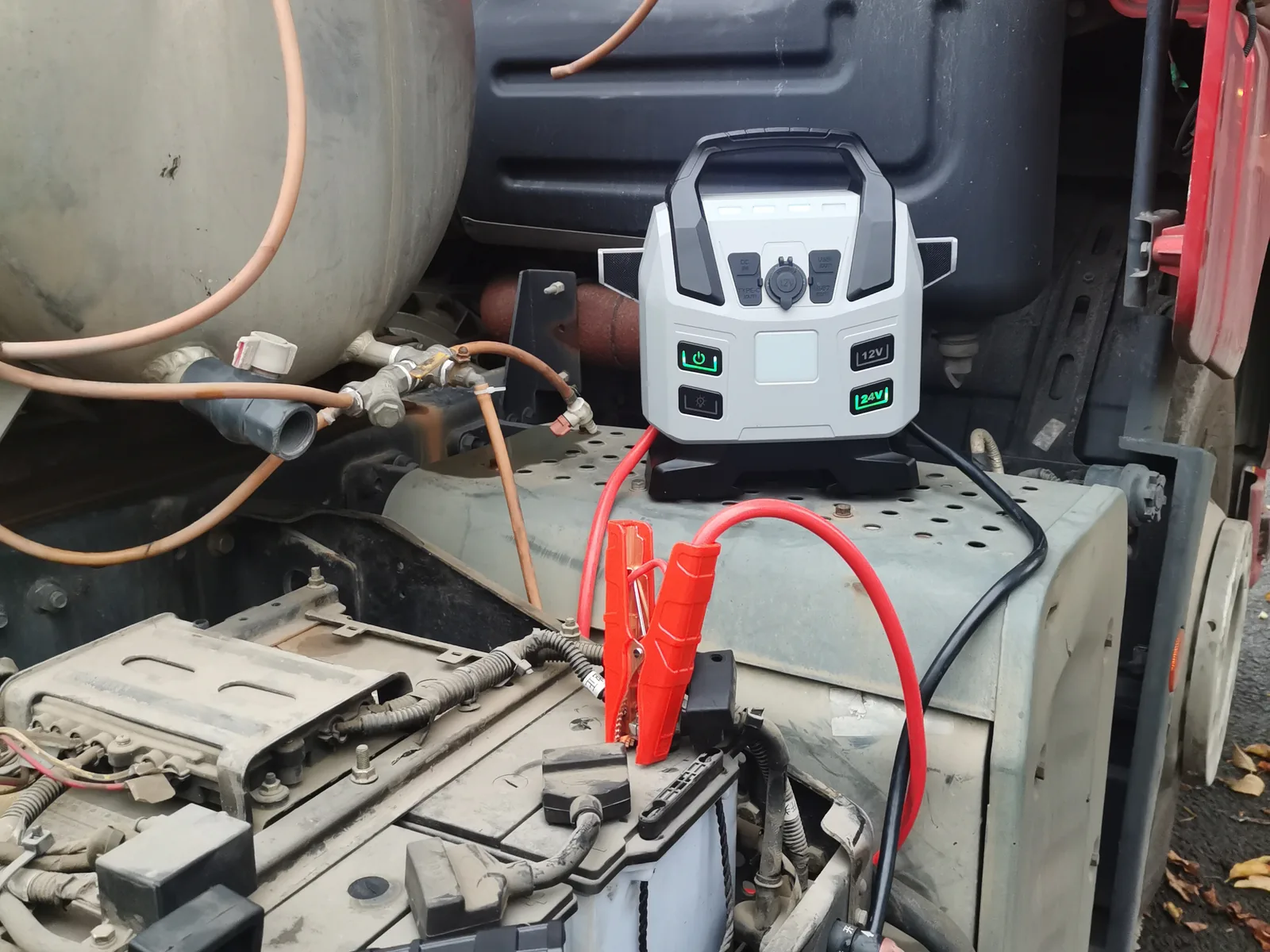
A dead battery in a passenger car is an inconvenience. A dead battery in a loaded truck, a bus mid-route, or an excavator on a construction site is a costly operational stoppage. The recovery window matters, which is why fleet operators and commercial vehicle workshops approach jump starter sourcing differently from the consumer market.
This guide is written for fleet managers, workshop procurement teams, and distributors sourcing 24V jump starter truck products for commercial and heavy-duty channels. It covers what determines product suitability, how to evaluate specifications, and what to ask a heavy duty jump starter supplier before committing to a bulk program.
Why commercial vehicles require dedicated 24V starting equipment
Most passenger vehicles run on 12V battery systems. Heavy commercial vehicles, including long-haul trucks, intercity buses, construction machinery, agricultural equipment, and selected specialty vehicles, often operate on 24V systems created by connecting two 12V batteries in series.
The starting demands of a large diesel engine are substantially higher than a petrol car engine. A cold diesel truck requires sustained cranking current over several seconds, not only a brief peak.
Standard 12V consumer jump starters are not designed for this load. Using an undersized unit can damage the jump starter, fail to start the vehicle, or trigger electrical faults on the vehicle.
A purpose-built heavy duty jump starter for 24V applications is engineered around a larger battery platform, heavier cable and clamp construction, and BMS protection calibrated for diesel cranking loads.
Understanding voltage: when 12V is enough and when 24V is required
Voltage is the first sourcing decision for any fleet or workshop buyer. A 12V jump starter covers passenger cars, light commercial vans, small trucks, motorcycles, and most recreational vehicles.
24V systems are found in heavy trucks, intercity and long-distance buses, construction machinery, agricultural equipment, and some specialty military and emergency vehicles.
Mixed fleets benefit from a dual-voltage unit that handles both 12V and 24V starting without requiring two separate products. For distributors, a dual-mode product simplifies inventory and broadens the addressable customer base.
- Choose 12V for passenger cars, vans, motorcycles, and light commercial use
- Choose 24V for heavy trucks, buses, construction machinery, and agricultural equipment
- Choose a 12V/24V model for workshops, recovery services, and mixed fleet operators
What the specifications actually mean for fleet use
Spec sheets for heavy-duty jump starters typically list start current, peak current, battery capacity, and operating temperature. Understanding these figures prevents costly mismatches between product and application.
Start current is the sustained current the unit can deliver during a normal cranking sequence. This number matters for real-world fleet performance because diesel engines need current across a full start attempt.
Peak current is the maximum instantaneous current the unit can produce, typically for a fraction of a second. It is useful for comparison, but it should never be the only number buyers evaluate.
Battery capacity determines how many start attempts the unit can support before recharging. For fleet workshop use, where the unit may start multiple vehicles in one shift, capacity matters more than in a consumer emergency-kit context.
Operating temperature range is particularly relevant for fleets in cold climates. Lithium batteries lose starting power in sub-zero conditions, so cold-start behavior should be checked before placing bulk orders.
- Compare start current alongside advertised peak current
- Check battery capacity for repeated starts during workshop use
- Verify low-temperature operation for cold-climate markets
- Ask whether the specification was tested under load on representative vehicles
Cable and clamp construction: the detail many buyers overlook
In heavy-duty jump starting, the cable and clamp assembly is as important as the battery pack. Thin cables create resistance that limits actual current delivery regardless of what the battery can theoretically produce.
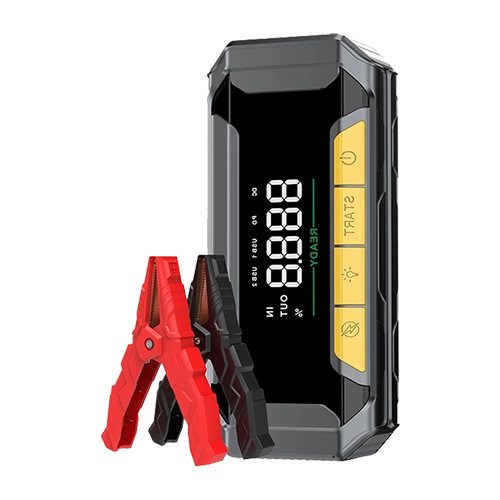
Clamps with inadequate jaw force or poor conductor contact create the same problem at the battery terminal. For truck and bus applications, buyers should inspect cable gauge, clamp spring tension, conductor material, and cable length.
- Heavy-gauge cables long enough to reach recessed truck battery terminals
- Industrial-grade clamps with strong spring tension and clean copper contact surfaces
- Reverse polarity protection built into the cable assembly and protection system
- Durable cable strain relief at both the clamp and unit housing junctions
What fleet buyers should verify before a bulk order
The specification sheet is the starting point, not the endpoint. Before committing to a fleet or distributor program, buyers should validate performance with a physical sample.
Use a clamp meter during a real start attempt on a representative vehicle to confirm whether the unit performs close to its rated start current. Then test multiple consecutive starts without recharging between attempts.
If the target market includes cold climates, test at low temperatures and review whether the manual explains proper cold-weather use. Most lithium jump starters should be warmed briefly before heavy cold-start loads.
Charging method also matters for fleet use. A unit with fast USB-C PD or practical mains charging is easier to keep ready between service calls than a model with slow or inconvenient charging.
- Actual start current under load on a representative truck or bus
- Repeated start performance without recharging between attempts
- Cold-start behavior and instruction clarity for winter markets
- Cable and clamp durability after repeated flexing
- Charging input, recharge time, and workshop charging practicality
- Housing durability for drops, vibration, and rough handling
Two product formats for different fleet and distributor needs
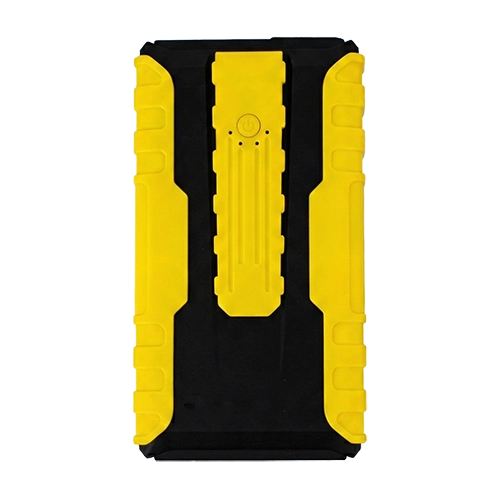
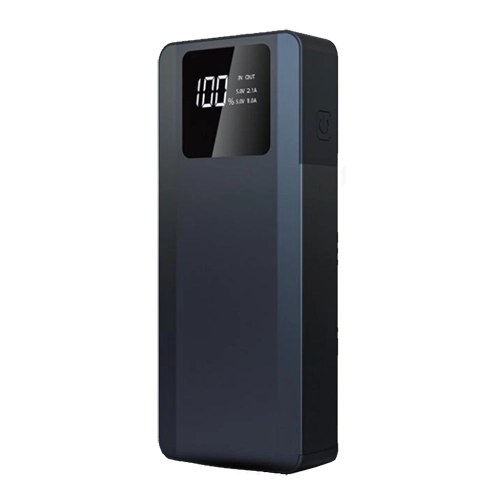
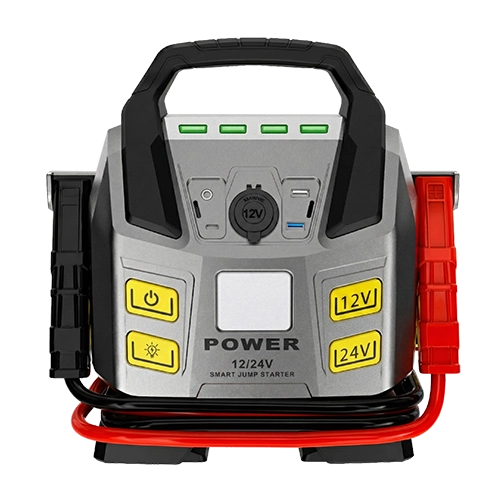
Dedicated high-capacity jump starters are the right choice for workshops and recovery services where jump starting is the primary use case and maximum starting performance is the priority. A larger battery platform and higher current specification justify the additional weight for professional applications.
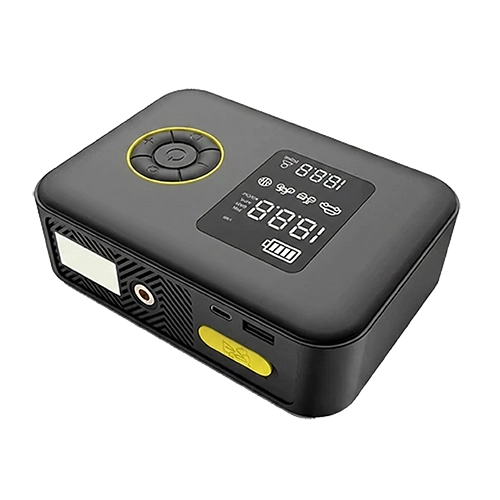
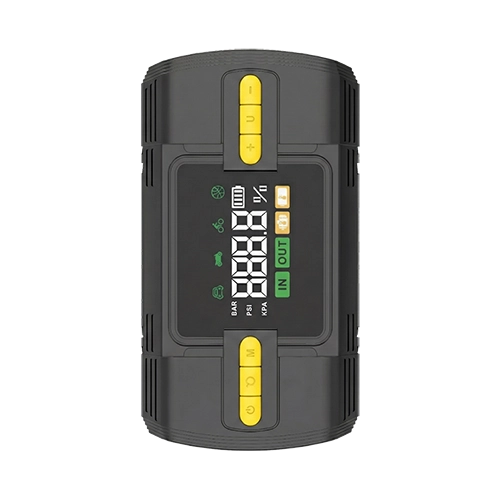
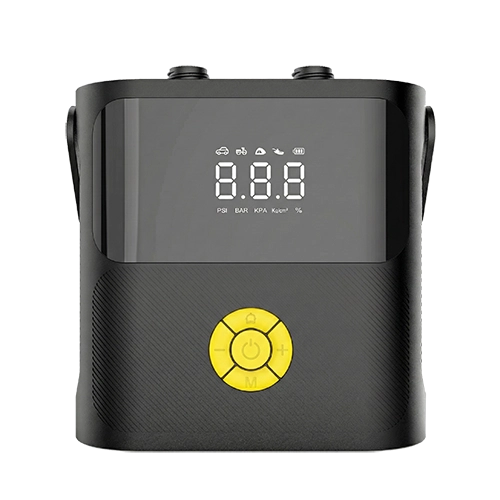
Jump starters with integrated air compressors add tire inflation capability alongside 24V starting power. This format is useful for recovery trucks, roadside assistance operators, and fleet maintenance teams that also need to top up tire pressure after roadside incidents.
For distributors evaluating which format to stock, the question is whether the end customer's primary use is jump starting alone or whether roadside recovery scenarios also apply.
- Choose a dedicated 12V/24V starter for workshop and recovery channels focused on cranking power
- Choose a 12V/24V starter with air compressor for mobile fleet maintenance and roadside assistance
- Stock both formats if your channel serves professional workshops and mobile recovery operators
Certifications and transport documentation for commercial orders
Lithium battery products require specific documentation for international shipping. This is relevant for distributors and importers sourcing from overseas manufacturers.
For commercial jump starters, common documents include UN38.3 battery safety testing, MSDS, and sea or air transport classification reports. CE and FCC documents are expected for European and North American market entry respectively, while RoHS may be required depending on destination market regulations.
Buyers should confirm that the supplier can provide all relevant documents before placing a bulk order, and should verify that certifications cover the specific model being ordered, not a related but different product.
Related Product Paths
Match this guide to real sourcing pages
Buyer FAQ
Questions importers usually ask before ordering
What vehicles need a 24V jump starter truck unit?
24V jump starters are used for heavy trucks, buses, construction machinery, agricultural equipment, and other commercial vehicles with 24V battery systems. Buyers should confirm vehicle voltage before use.
Is peak current enough to compare heavy-duty jump starters?
No. Peak current is an instantaneous figure. Fleet buyers should also compare start current, battery capacity, cable and clamp construction, repeated start performance, and cold-weather behavior.
What should a heavy duty jump starter supplier provide before bulk orders?
A reliable supplier should provide specifications, sample units, test guidance, export documents such as UN38.3 and MSDS, certification support, product manuals, and OEM customization options.
Should distributors choose a dedicated starter or a model with air compressor?
Dedicated starters fit workshops and recovery services focused on maximum cranking power. Models with air compressors fit roadside assistance and fleet maintenance teams that also need tire inflation capability.
Source heavy-duty 12V/24V jump starters for fleet channels
Share your target vehicle types, market, order quantity, and OEM requirements. Tuomo Tech can recommend dedicated truck starters or 12V/24V models with air compressor support.