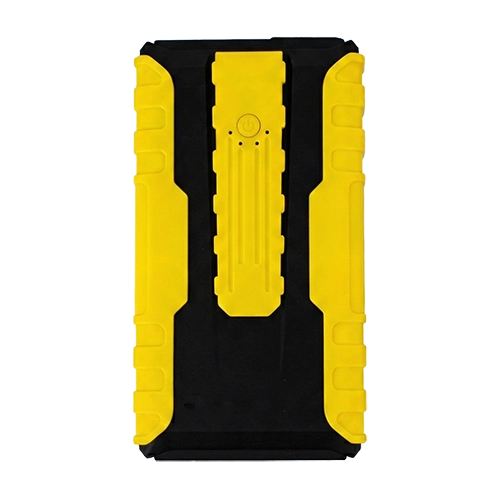
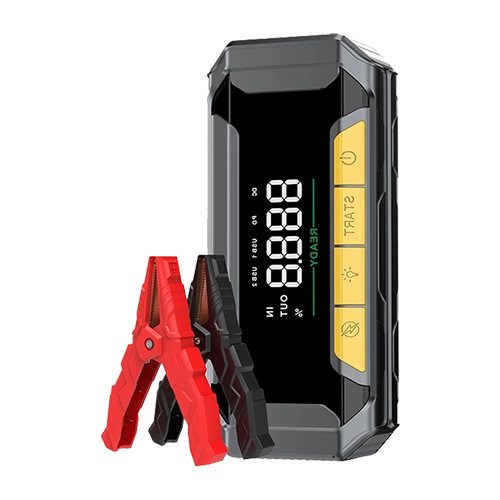
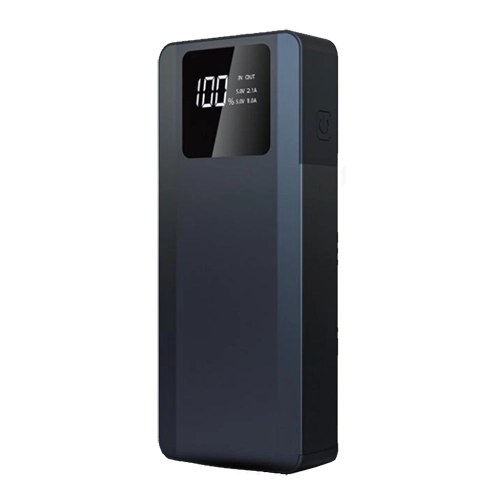
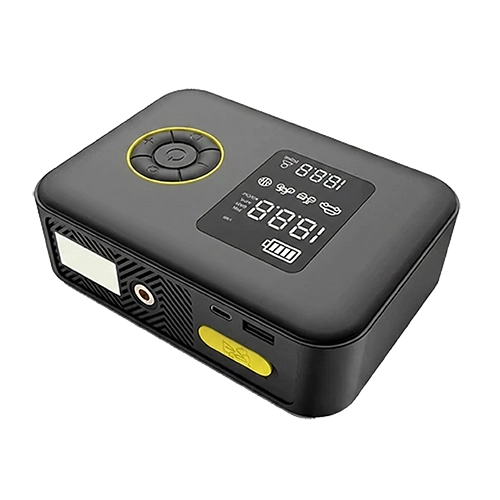
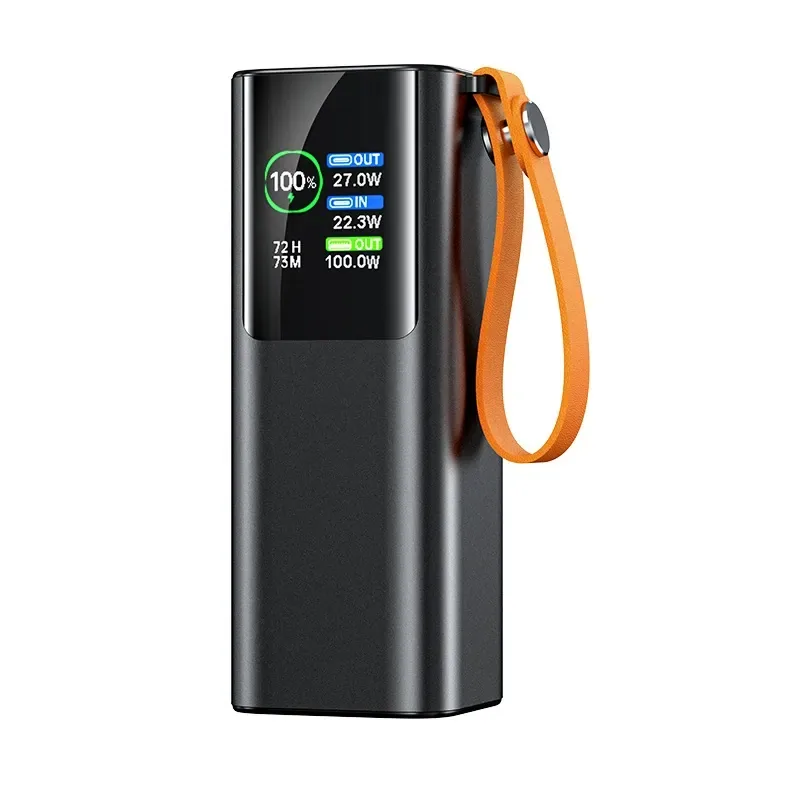
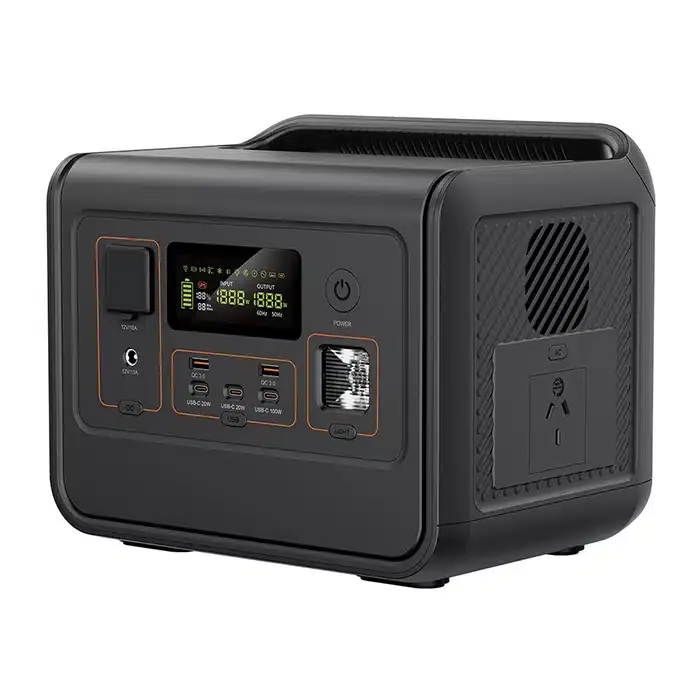
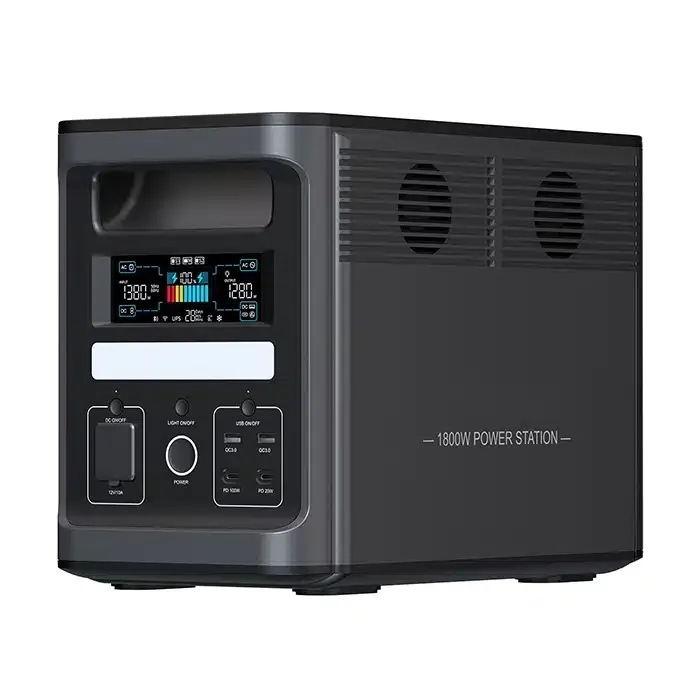
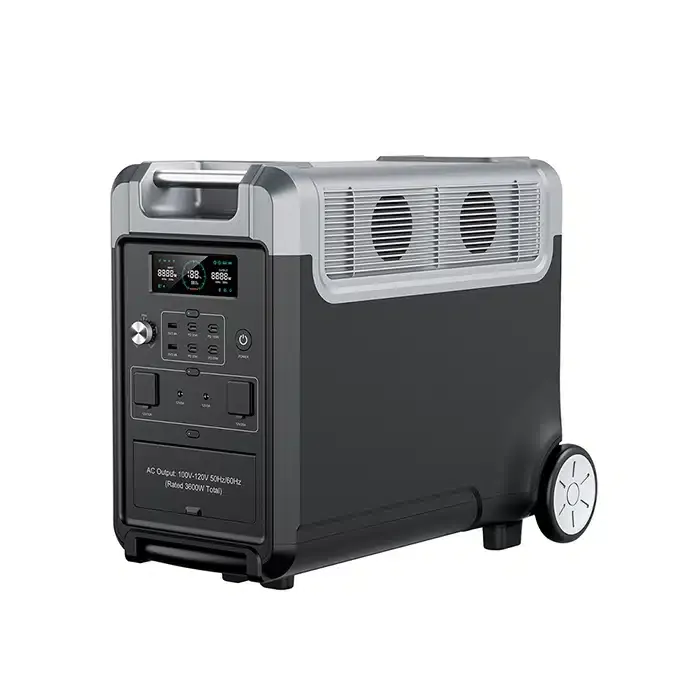
Outdoor and emergency power products have become a reliable category for importers serving camping, adventure, and off-grid segments. Solar power banks sit at the intersection of portability and energy independence, a combination that sells well in markets with unreliable grid access or strong outdoor retail culture.
But sourcing them wholesale is not as simple as comparing capacity numbers. B2B buyers need to check panel output, charging paths, feature combinations, OEM options, and sample performance before placing a bulk order.
Why solar power banks are worth adding to your outdoor channel
The category has a clear retail story. Customers understand solar charging intuitively, and the feature commands a price premium over standard power banks without requiring complex explanation.
For distributors serving camping chains, outdoor lifestyle brands, or emergency preparedness retailers, solar power banks fill a natural gap between regular power banks and larger portable power stations.
Demand signals are strongest in markets where outdoor activity is seasonal, including Northern and Eastern Europe and North America. They are also relevant in regions where power outages or off-grid conditions are a daily reality, including parts of the Middle East, North Africa, and South Asia.
What to understand about solar charging performance
This is the single most important point for buyers to get right before sourcing. Compact solar panels on portable power banks are not designed for rapid recharging.
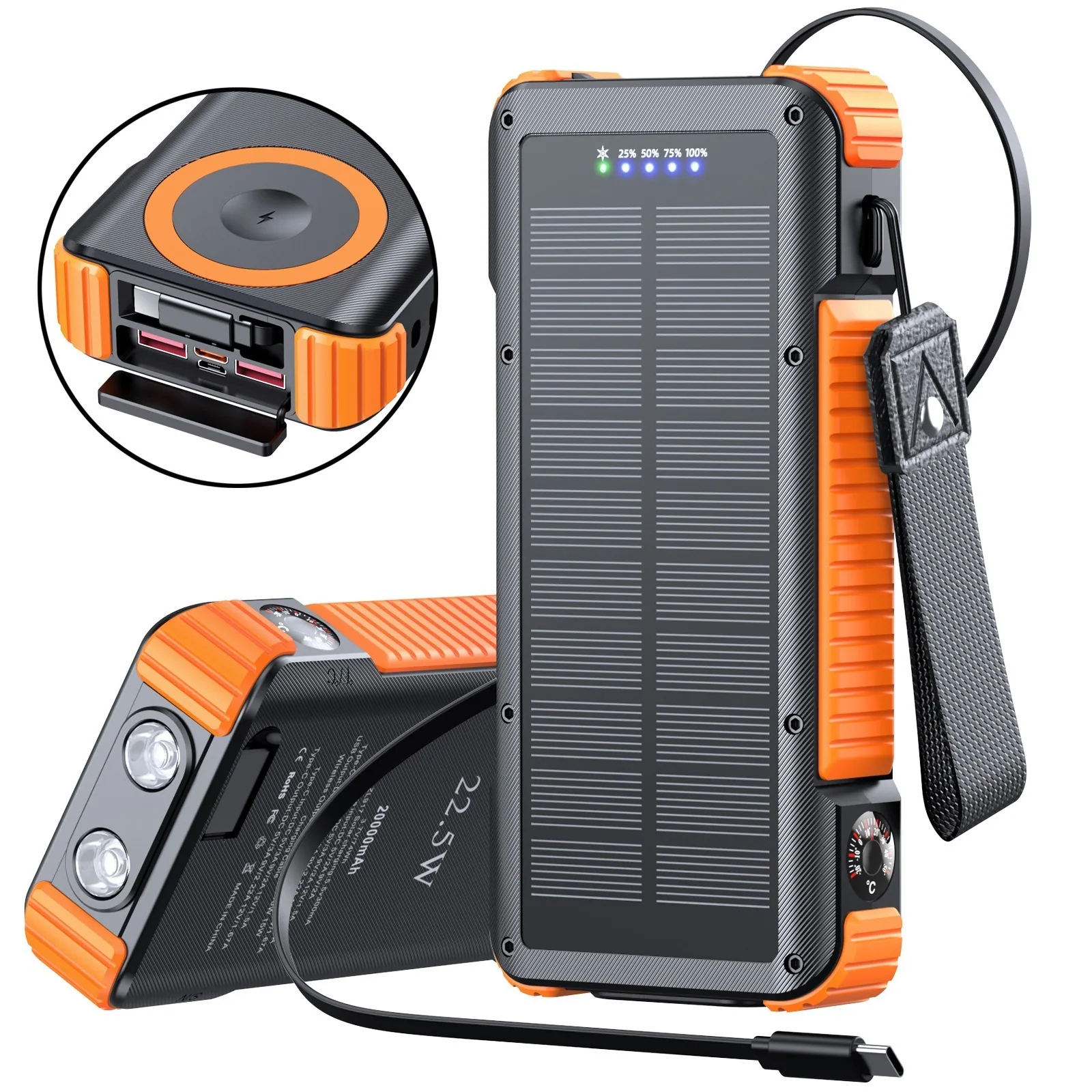
A typical panel on a 20000mAh unit delivers somewhere between 0.5W and 1.5W under good sunlight conditions. At that rate, fully recharging the battery from solar alone would take days, not hours. This is not a product defect. It is how the technology works at this form factor.
Solar charging on a portable power bank is best positioned as auxiliary or emergency top-up, not as a primary charging method. Your packaging and manuals should explain this clearly before the product reaches customers.
- Verify actual solar panel wattage under standard test conditions, not only peak or theoretical output
- Check whether USB-C PD input is available for rapid mains charging
- Make sure product descriptions and packaging explain the auxiliary nature of solar charging
Key feature combinations and which channels they fit
Modern solar power banks are rarely single-feature products. The combination of features you select should match your distribution channel, target customer, and price point.
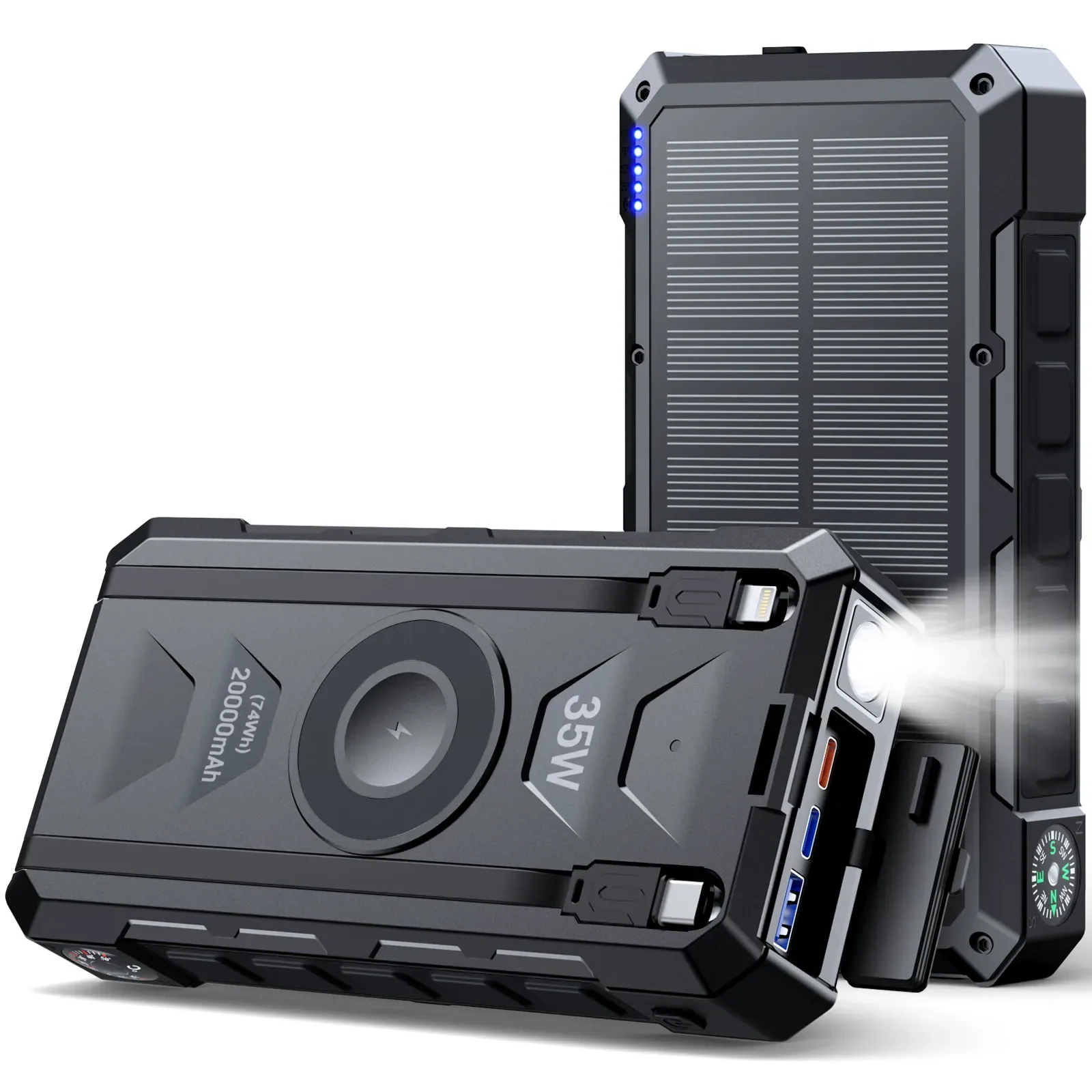
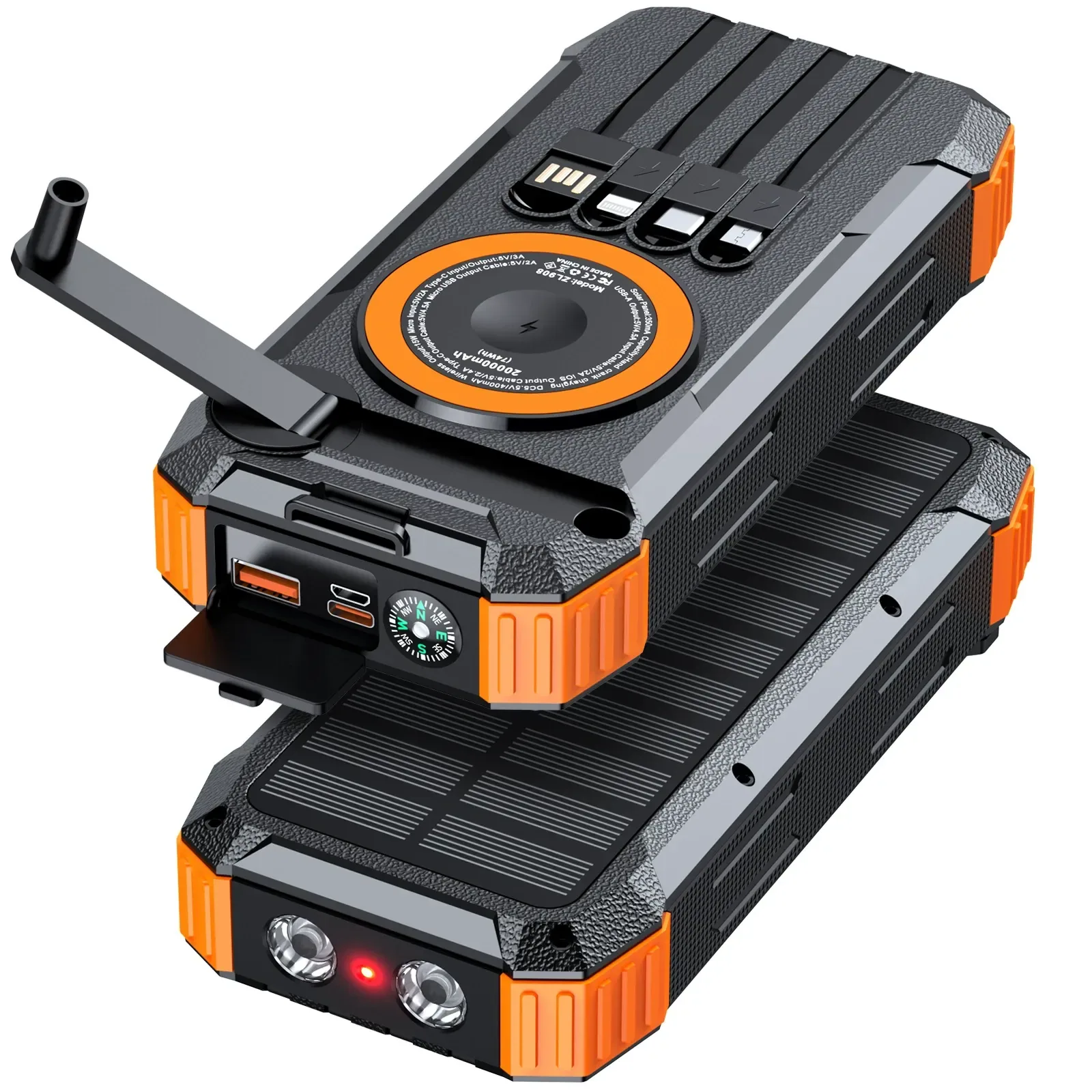
Solar plus built-in cables reduces accessory dependency for end users. Retractable cable designs with USB-C, Lightning, or USB-A options simplify the product experience and reduce lost-cable complaints.
Solar plus hand crank adds a true off-grid backup that does not depend on sunlight. It is especially relevant for emergency preparedness channels, government procurement, and markets with extended power outages.
Solar plus wireless charging and 35W USB-C output targets laptop users and multi-device travelers. Solar plus camping light and SOS is better for outdoor retailers, hiking segments, and emergency kit bundlers.
- Choose built-in cables for travel and everyday outdoor use
- Choose hand crank support for emergency and preparedness channels
- Choose higher USB-C output for tech-forward buyers and multi-device use
- Choose camping light and SOS functions for outdoor, survival, and kit-bundling programs
OEM customization options for wholesale buyers
If you are sourcing solar power banks for a branded program, a factory-direct outdoor solar power bank supplier can usually support shell color, material finish, logo placement, retail packaging, accessory bundles, and export documentation.
Minimum order quantities vary by supplier and product configuration. Buyers sourcing for the first time should request samples first, test solar charging behavior, check cable durability, and review the housing under realistic field conditions before committing to production.
- Shell color and material finish, including matte, rubberized, or high-impact housing options
- Logo placement through pad printing, laser engraving, or printed retail packaging
- Retail box artwork, insert copy, and multi-language manuals
- Accessory bundles such as charging cable, carry pouch, or carabiner clip
- Certification support for CE, FCC, RoHS, and UN38.3 battery transport documents
What to test before bulk orders
Samples should be evaluated against a standard checklist. The most common issues in this category involve details that are difficult to verify from a spec sheet alone.
Leave the unit in direct sunlight for a measured period and verify how much charge is actually delivered. Cross-check the result against the claimed panel output.
Test USB-C output stability with a laptop or tablet to confirm rated wattage holds under load. For retractable cable models, flex the cable repeatedly at the connector junction because this is a common failure point.
Also verify camping light brightness, switch mode behavior, SOS pattern, housing construction, panel alignment, solar film adhesion, packaging claims, and manual accuracy.
- Solar charging behavior under measured sunlight exposure
- USB-C output stability under real device load
- Built-in cable durability at the connector junction
- Camping light brightness, mode switching, and SOS function
- Housing strength, panel alignment, and solar film adhesion
- Packaging and manual accuracy against actual product performance
Working with a factory-direct supplier
Buying direct from a manufacturer rather than a trading intermediary gives you more control over specifications, documentation, and customization options. It also lets you ask technical questions directly and get answers grounded in how the product is actually made.
When evaluating a supplier, look for responsiveness on technical questions, willingness to provide pre-shipment test reports, and experience with certification requirements in your target market.
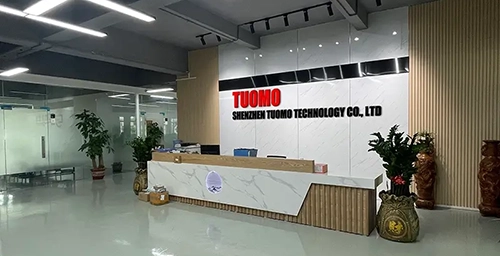
Tuomo Tech supplies solar power banks for outdoor, camping, emergency, and promotional B2B buyers, with OEM and ODM support available across the current solar power bank models.
Related Product Paths
Match this guide to real sourcing pages
Buyer FAQ
Questions importers usually ask before ordering
Can a solar power bank fully recharge from sunlight quickly?
No. Compact panels on portable solar power banks are best used for auxiliary or emergency top-up. A 20000mAh unit can take days to fully recharge from sunlight alone, depending on panel wattage and sunlight conditions.
What should wholesale buyers verify before ordering solar power banks?
Verify actual solar panel wattage, USB-C input and output performance, built-in cable durability, camping light behavior, housing quality, packaging claims, manuals, and export documentation.
Which solar power bank features fit outdoor retail channels?
Outdoor retail channels usually respond well to solar charging, camping lights, SOS modes, rugged housing, built-in cables, and carabiner-style accessories. Emergency channels may also value hand crank backup.
Can Tuomo Tech support OEM solar power bank programs?
Yes. Tuomo Tech can support logo customization, shell color, packaging, manuals, accessory bundles, sample evaluation, and documentation planning for B2B solar power bank buyers.
Source solar power banks for your outdoor channel
Share your target market, feature requirements, and order plan. Tuomo Tech can recommend solar power bank models and OEM options for wholesale buyers.